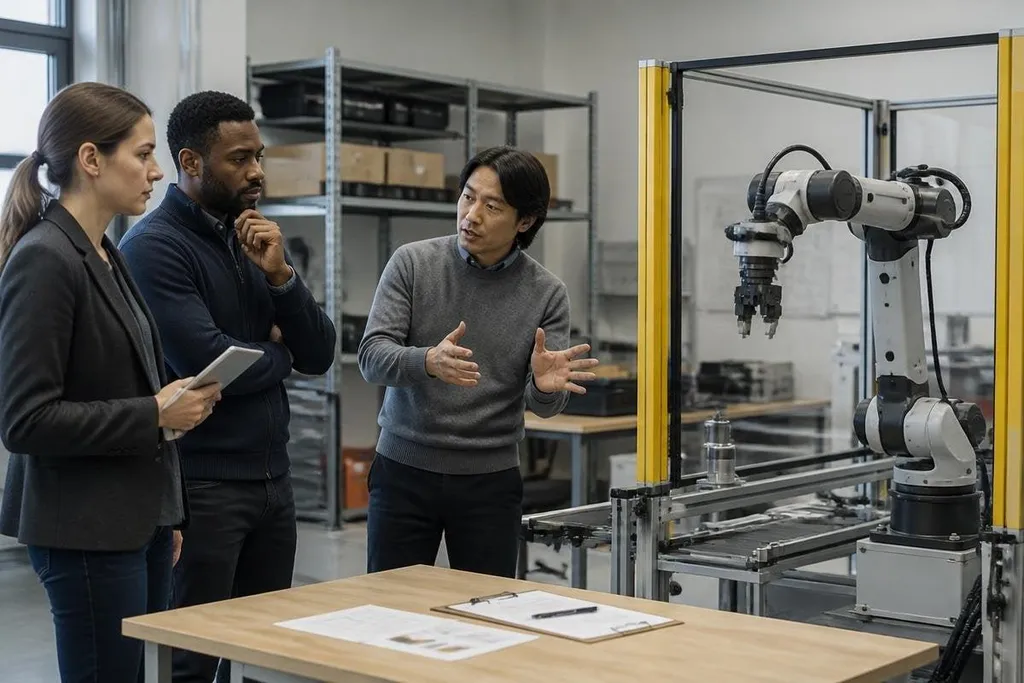
A robot can change a person’s work, privacy, safety, or access to essential services before the company has a clear policy for those effects. Human rights rules give robotics teams a way to make those decisions before a machine reaches a factory, hospital, home, or public space.
Quick read
- Robots can affect safety, privacy, work, and equal treatment.
- A policy should guide design, testing, sales, and deployment.
- Clear ownership matters more than a polished statement.
Robots affect people beyond the operator
A robotics company may focus on the person who runs the machine. The machine can still affect many others: a worker whose tasks change, a patient recorded by a care robot, or a visitor seen by a security system.
That wider group matters because people may have little control over the robot’s use. A warehouse worker may not choose where cameras point. A resident may not know how a delivery robot records its route. A patient may have no practical way to refuse an automated system used during care.
Human rights policies make those effects part of the engineering work. They ask who could be harmed, what information the robot collects, who can change its settings, and what happens when the system makes a mistake.
Policy turns values into design rules
A statement about fairness has limited use if engineers and customers cannot apply it. A working policy should connect broad rights to specific decisions across the product’s life.
For privacy, that may mean collecting only the data the robot needs, setting a deletion period, and limiting access to recordings. For safety, it may mean defining stop controls, human supervision, and the conditions that require a robot to leave service.
Work also needs a place in the policy. A company should explain how it will assess job changes, train affected workers, and handle performance monitoring. A robot that measures speed every minute can create pressure even when its physical task is safe.
The review should follow the robot beyond the company’s own site. Reporting at Robot 24 can help identify suppliers of its cameras, batteries, and software, so the policy can address labor conditions before the machine reaches a worker.
The policy must cover the whole supply chain
A robotics company does not control every decision alone. Hardware may come from one supplier, software from another, and deployment from a customer with different rules and working conditions.
That creates gaps. A company may write careful privacy rules for its own application while a reseller changes data settings. A customer may place a mobile robot in a workplace where workers receive no explanation or appeal process.
The policy should set requirements for suppliers, integrators, and customers. Contracts can define permitted uses, data handling, safety duties, incident reporting, and access for audits. Sales teams also need a clear route for rejecting uses that create a serious rights risk.
Good governance does not remove responsibility from engineers. It gives them a path when a customer request conflicts with safety, privacy, or equal treatment.
Evidence matters more than promises
A policy earns trust through records. Teams should keep design reviews, risk assessments, test results, incident reports, and changes made after feedback. Those records show whether the company acted on its own rules.
The process should include people who understand the work affected by the robot. That can include operators, maintenance staff, people with disabilities, privacy specialists, and local safety teams. Their input can reveal problems that a lab test misses.
I’d reject any policy that sits apart from product decisions. The useful version changes what gets tested, what gets sold, and what happens after deployment.
A practical policy check
Before approving a robot or a new customer use, ask:
- People affected: Who interacts with the robot, and who may be watched, ranked, moved, or excluded by it?
- Data collected: What images, audio, location data, or work records does the system gather?
- Human control: Who can stop the robot, correct a decision, or report harm?
- Workplace effects: What tasks change, and what training or notice do affected workers receive?
- Supplier duties: Which partner controls the hardware, software, data, or service team?
- Proof kept: What records show that the company tested the risks and fixed known problems?
These questions should appear before a sales contract, not after a complaint. The answers can also guide product requirements, user manuals, staff training, and customer support.
A human rights policy will not predict every problem in robotics. It can make responsibility visible before deployment, when the company still has time to change the design or refuse the use. The next test is practical: can an engineer, worker, or customer use the policy to stop a harmful decision?